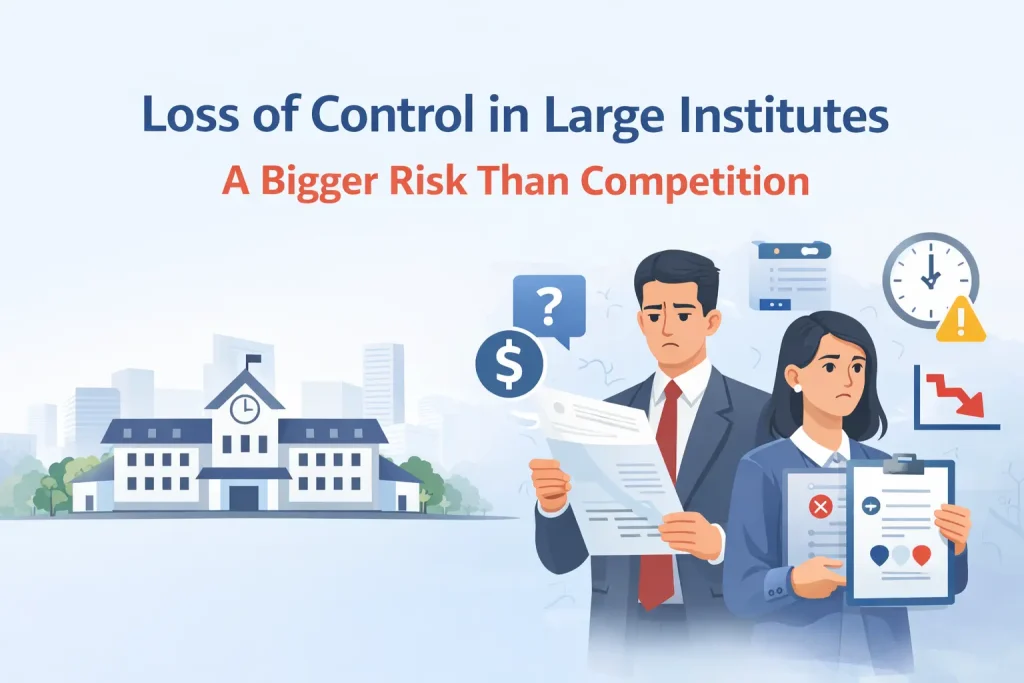
The biggest risk in large institutes is not competition. It is loss of control without realising it.
What the problem means
In large educational institutes, most leaders focus on external competition new colleges opening nearby, aggressive marketing by others, or pricing pressure. However, the real risk is internal. Over time, as departments grow, processes multiply, and decision-making spreads across teams, leadership gradually loses direct visibility into what is happening. The institute may appear functional on the surface, but the ability to clearly see operational issues, financial performance, and risks on a daily basis diminishes.
This loss of control is not always obvious. Reports are shared, meetings happen, and operations continue. Yet, decision makers do not always have accurate, real-time insights into what is working, where delays are occurring, and where opportunities exist.
Why loss of control happens in large institutes
Unlike small organizations where leaders are directly involved, large institutes tend to have many layers of processes, people, and systems. This creates three main challenges:
1. Fragmented information flows
Different departments use different tools and methods to track their work. Admissions could be using one software, finance another, operations still another, and communication often happens outside formal systems. When information resides in multiple places, no one person has a complete, current view of the institute’s performance. This makes it hard for directors to take informed decisions quickly.
2. Manual reporting and delayed visibility
When leaders depend on weekly or monthly reports instead of real-time dashboards, they act on outdated information. Issues get identified too late, often during audits or quarterly reviews, rather than when they first began. This creates a situation where management thinks they are in control, but they are not.
3. Over-dependence on verbal updates
When leadership relies on summaries from team leads rather than direct data visibility, small problems go unnoticed until they escalate into bigger issues. Delays, miscommunication, and misunderstandings are common in such setups.
Every minute your team spends doing what AI could do, you’re not saving time, you’re burning profit.
— Prathmesh Sutar
Consequences institutes often do not notice soon enough
When institutes lose control internally, the results aren’t always immediately dramatic. Instead, they unfold quietly and steadily.
Reduced decision quality
Without accurate real-time data, leaders make decisions based on assumptions or old figures. This weakens strategic planning and increases the risk of costly mistakes.
Operational delays and inefficiencies
Tasks depend on manual follow-ups, judgment calls, and tribal knowledge rather than standardized processes. This increases turnaround times and dependency on specific individuals.
Hidden risks grow
Issues such as uncollected fees, unvalidated reports, incomplete processes, or inaccurate forecasts often surface only during audits. By then, fixing them is costlier and more complex.
Missed opportunities
Institutes may fail to capitalise on growth opportunities simply because they do not see them in time. Unconverted leads, underutilised resources, and delayed academic initiatives are examples of hidden opportunities that go unnoticed.
Symptoms your institute may be losing control
These signs suggest deeper operational loss of control, even if they may seem routine:
- Frequent last-minute meetings to resolve issues
- Delays in approvals across departments
- Conflicting numbers from different teams
- Dependence on verbal updates rather than documented evidence
- Repeated follow-ups to get simple answers
Institutes often normalize these situations as “business as usual,” but they are early warnings of weakening internal control.
The solution: What directors must have in place every day
To regain control and maintain clarity, institute leadership must adopt practices and systems that deliver visibility, consistency, and accountability on a daily basis.
Daily leadership dashboard
A single consolidated dashboard that shows key performance indicators across admissions, finance, operations, and student engagement helps leaders see:
- Admissions and enrolment trends in real time
- Fee collection status and pending balances
- Operational bottlenecks across departments
- Pending approvals or overdue tasks
This daily visibility enables leaders to identify issues early and act promptly.
Standardized processes and automation
Systems that automate routine tasks reduce dependency on individual staff members and minimize errors. Automation also ensures that data is updated consistently and available when needed.
Clear escalation paths
Instead of waiting for scheduled reports, institute leaders should receive alerts for exceptions for example, significant delays in student follow-ups, missing fee collections, or process backlogs. Exceptions should trigger immediate review and action.
Culture of accountability and data-driven decisions [MUST HAVE]
Teams must be encouraged to base decisions on data rather than intuition. When leaders ask for numbers, the answers should come from system-generated reports rather than manually compiled spreadsheets.
Why this matters more than external competition
Competition outside the institute is visible and measurable. Institutes can benchmark admissions, pricing, and branding against others. Loss of control, however, is internal, silent, and progressively damaging.
An institute that manages its internal operations effectively will outperform competitors in the long run because it:
- Responds faster to changes
- Makes informed decisions
- Maintains consistent quality
- Identifies risks and opportunities early
In contrast, institutes that focus only on external competition may overlook real vulnerabilities inside their own operations.
Final thoughts
Competition affects visibility and branding, but losing control internally affects the core ability to run the institute efficiently. Directors should prioritise systems and practices that ensure accurate daily insights, standardised processes, and data-driven leadership. This approach not only mitigates hidden risks but also positions the institute for sustainable growth.
If you want to strengthen control, reduce inefficiencies, and convert organizational insights into action, it all begins with reliable visibility into your institute’s operations every single day.
Book a consultation below
We are here to help you how you can save a lot of money, time and grow efficiency in your institute, book a 1 to 1 clarity consultation from expert team of Technolize