Introduction
SAP Process Integration (SAP PI) and SAP Process Orchestration (SAP PO) have been important components of enterprise integration for many years. However, the SAP integration landscape is changing, and organizations still running PI/PO need to start planning their transition to modern cloud-based integration.
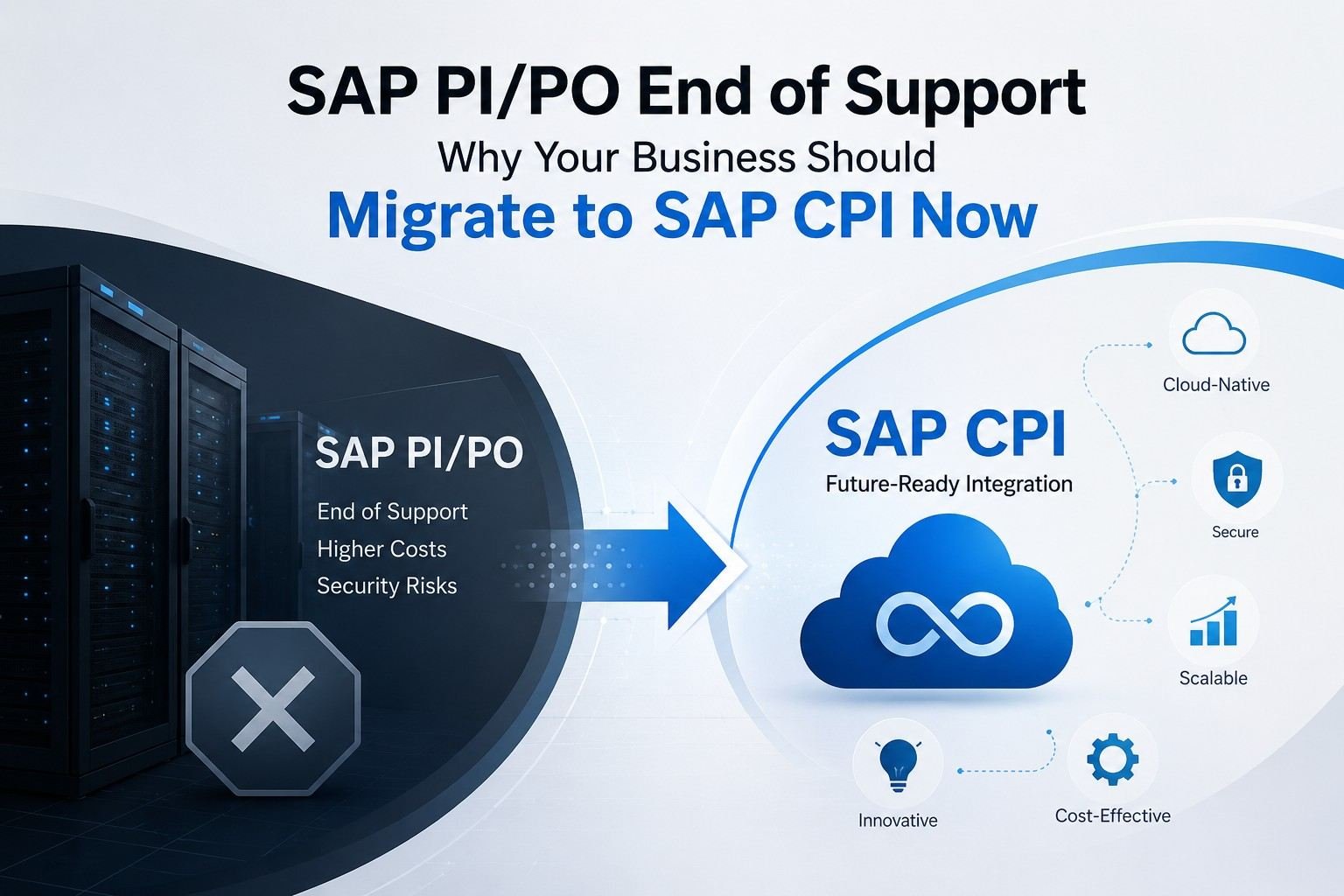
SAP’s current roadmap provides mainstream maintenance for SAP PI/PO through the end of 2027, with an optional extended maintenance period available through 2030. This means businesses should not wait until the final deadline to begin their migration.
For enterprises, moving from SAP PI/PO to SAP CPI is not simply about replacing an existing middleware platform. It is an opportunity to modernize integration architecture, improve scalability, simplify operations, and prepare for future cloud and digital transformation initiatives.
What Does SAP PI/PO End of Support Mean?
SAP PI and SAP PO are built on the SAP NetWeaver platform and were designed primarily for traditional on-premise integration environments. As SAP moves toward cloud-first technologies, SAP Integration Suite has become the strategic platform for modern enterprise integration.
The end of mainstream maintenance does not mean that PI/PO will suddenly stop working in 2027. However, organizations should understand that continuing to depend on a legacy integration platform can create increasing operational, technical, and business risks.
SAP recommends customers assess their existing integration landscape and plan their transition to SAP Integration Suite, which includes SAP Cloud Integration, API Management, Event Mesh, and other integration capabilities.
Why Businesses Should Start Migrate to SAP CPI Now
Waiting until the maintenance deadline can create unnecessary pressure. Enterprise integration landscapes often contain hundreds or even thousands of interfaces, making migration a project that requires careful assessment, planning, testing, and deployment.
Starting early gives organizations enough time to identify obsolete interfaces, prioritize business-critical integrations, redesign legacy scenarios, test migrated interfaces, and execute the transition in phases.
A planned SAP CPI Migration is considerably more manageable than a last-minute migration driven by support deadlines.
1. Move to SAP's Strategic Integration Platform
SAP Integration Suite is SAP’s strategic platform for modern integration requirements. It provides capabilities for connecting SAP and non-SAP applications across cloud and on-premise environments.
Organizations migrating from SAP PI/PO to SAP Integration Suite can move beyond traditional middleware and adopt modern approaches such as API-led integration, event-driven architectures, and hybrid integration.
This makes the migration an opportunity to modernize the overall integration landscape rather than simply recreate existing interfaces.
2. Reduce Dependence on Legacy Infrastructure
SAP PI/PO environments require infrastructure, administration, upgrades, monitoring, and ongoing maintenance.
With SAP Cloud Integration, organizations can take advantage of a managed cloud-based integration platform. SAP manages the underlying platform while IT teams can focus more on business integration, automation, and innovation.
This can help reduce the operational burden associated with maintaining traditional middleware infrastructure.
3. Improve Scalability and Flexibility
Business requirements can change quickly. New applications, acquisitions, customers, suppliers, and digital services can create additional integration requirements.
SAP Integration Suite provides a scalable environment for connecting applications, services, APIs, events, and data across heterogeneous landscapes. SAP describes the platform as a scalable iPaaS designed to support diverse integration scenarios.
For enterprises experiencing rapid growth, this flexibility can make it easier to expand their integration landscape without repeatedly redesigning the underlying architecture.
4. Modernize Existing Integrations
A major mistake organizations can make is treating migration as a simple lift-and-shift exercise.
The transition from SAP PI/PO to SAP CPI provides an opportunity to review existing interfaces and determine which should be reused, redesigned, replaced, or retired.
SAP’s migration guidance recommends an approach based around assessing the existing landscape, transforming integration scenarios where appropriate, and then moving them to the new platform.
This approach can help eliminate unnecessary interfaces and improve the overall quality of the integration architecture.
5. Connect SAP and Non-SAP Applications More Easily
Modern businesses rarely operate using SAP systems alone.
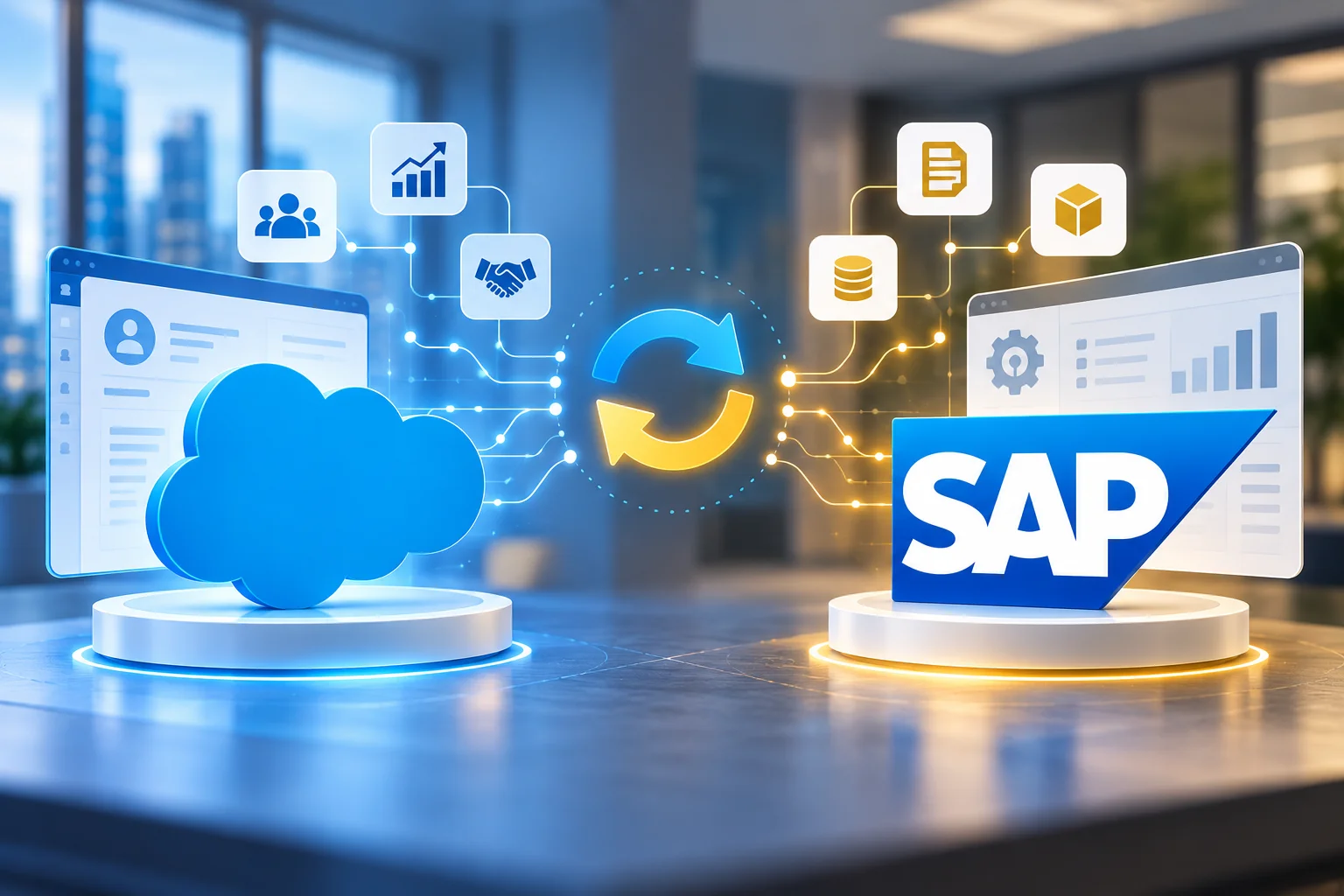
They may need to connect SAP S/4HANA with Salesforce, Microsoft applications, third-party SaaS platforms, databases, partner systems, APIs, and other enterprise applications.
SAP Integration Suite is designed to support these heterogeneous environments, making it easier to establish connections between cloud and on-premise applications.
This creates a more connected enterprise while reducing the complexity of managing multiple integration technologies.
6. Take Advantage of APIs and Event-Driven Integration
Traditional integration architectures often rely heavily on point-to-point connections and older communication patterns.
SAP Integration Suite provides capabilities for modern API-led and event-driven integration. API Management can help organizations securely expose and manage APIs, while Event Mesh supports event-driven scenarios.
This allows businesses to build more responsive integration architectures and prepare for modern digital applications and automation initiatives.
7. Simplify Hybrid Integration
Moving to the cloud does not mean every enterprise system needs to move to the cloud immediately.
Many organizations continue to operate critical systems in private data centers while adopting cloud applications. SAP Integration Suite supports hybrid integration, including the Edge Integration Cell option for running integration workloads in customer-controlled environments.
This provides organizations with greater flexibility when migrating from SAP PI/PO while addressing security, compliance, latency, or connectivity requirements.
8. Improve Integration Monitoring and Management
Managing a large PI/PO landscape can become increasingly complex as the number of interfaces grows.
Moving to SAP Integration Suite provides modern tools for managing integration flows, monitoring processing, handling errors, and governing integration environments.
Better visibility can help IT teams identify failures faster and maintain reliable business processes across connected systems.
9. Reduce Migration Risk by Starting Early
Enterprise migration projects require more than technical development.
Organizations need to analyze interfaces, understand dependencies, prepare environments, configure security, perform testing, coordinate business teams, and plan production cutovers.
SAP provides migration assessment and migration capabilities to help organizations evaluate their existing PI/PO landscape and estimate the effort involved.
Starting early gives businesses time to use these tools, develop a realistic roadmap, and migrate critical integrations in controlled phases.
10. Prepare for Future SAP Innovation
Perhaps the biggest reason to migrate is long-term technology readiness.
SAP Integration Suite provides a foundation for modern cloud integration, APIs, events, automation, and emerging technologies. Instead of continuing to invest heavily in a legacy middleware environment, businesses can establish an integration architecture designed for future digital initiatives.
For organizations planning SAP S/4HANA transformation, cloud adoption, business automation, or broader SAP BTP initiatives, moving to SAP Integration Suite can become an important part of the overall technology roadmap.
How to Start Your SAP PI/PO to SAP CPI Migration
A successful migration should begin with an assessment rather than immediately rebuilding interfaces.
A practical approach is:
- Inventory the existing PI/PO landscape and identify all interfaces.
- Classify integrations based on business criticality, complexity, and technology.
- Identify unused or obsolete interfaces that do not need to be migrated.
- Assess migration feasibility using available SAP migration assessment capabilities.
- Define the target SAP Integration Suite architecture.
- Prioritize and migrate interfaces in phases.
- Test integrations thoroughly before production deployment.
- Monitor the new environment and optimize integration performance after migration.
This structured approach can reduce unnecessary effort and make the transition more predictable.
Why Work With an SAP CPI Migration Partner?
A large-scale SAP PI/PO Migration requires knowledge of both legacy integration environments and modern SAP Integration Suite architecture.
An experienced SAP CPI Migration Services provider can help with landscape assessment, migration planning, interface redesign, integration flow development, testing, security configuration, deployment, and post-migration support.
The right SAP Integration Experts can also identify opportunities to modernize existing interfaces instead of simply reproducing legacy processes in the new environment.
Conclusion
The end of SAP PI/PO mainstream maintenance is an important milestone for enterprises still relying on traditional SAP integration infrastructure. With mainstream maintenance ending in 2027 and extended maintenance available through 2030, organizations have a defined window to plan and execute their migration.
The best approach is not to wait for the deadline. Start with an assessment, understand the existing integration landscape, identify modernization opportunities, and create a phased SAP PI/PO to SAP CPI Migration roadmap.
By moving to SAP Integration Suite, organizations can build a more scalable, flexible, secure, and future-ready integration landscape while reducing dependence on legacy middleware.
For enterprises considering SAP CPI Migration Services, the time to start planning is now—not when the support deadline is approaching.