Introduction
Enterprise integration has changed significantly as businesses move from traditional on-premise systems toward cloud-based applications and digital platforms. For many years, SAP Process Integration (SAP PI) and SAP Process Orchestration (SAP PO) were widely used to connect SAP and non-SAP systems. Today, organizations are increasingly moving toward SAP Cloud Integration (SAP CPI), which is a core capability within SAP Integration Suite.
For enterprises currently using SAP PI/PO, understanding the differences between the two platforms is important before planning a migration. SAP describes SAP Integration Suite as its strategic integration platform and provides specific guidance for transitioning existing PI/PO interfaces to the cloud.
In this article, we compare SAP PI/PO vs SAP CPI, covering architecture, deployment, scalability, integration capabilities, development, security, monitoring, and migration considerations.
What Is SAP PI/PO?
SAP PI, later known as SAP PO, is an enterprise integration platform built around the SAP NetWeaver technology stack. It has traditionally been deployed within an organization’s private or on-premise landscape.
SAP PI/PO can connect SAP applications with third-party systems and supports different communication protocols, adapters, message mappings, routing, transformation, and integration processes.
For organizations with large legacy integration landscapes, PI/PO may contain hundreds of interfaces developed over many years. This makes moving away from the platform a significant transformation project rather than a simple software replacement.
What Is SAP CPI?
SAP Cloud Integration, commonly referred to as SAP CPI, is SAP’s cloud-based integration capability within SAP Integration Suite.
It enables businesses to connect cloud and on-premise applications across SAP and non-SAP environments. SAP Integration Suite extends beyond Cloud Integration by bringing together capabilities such as API Management, Integration Advisor, Open Connectors, and other integration services.
This makes SAP Integration Suite suitable for modern enterprise integration requirements, including API-led integration, hybrid integration, and event-driven architectures.
SAP PI/PO vs SAP CPI: Key Differences
The important point is that SAP CPI should not be viewed simply as a newer version of PI/PO. SAP Integration Suite provides a broader set of integration capabilities, allowing organizations to consolidate multiple integration requirements within one platform.
1. Architecture and Deployment
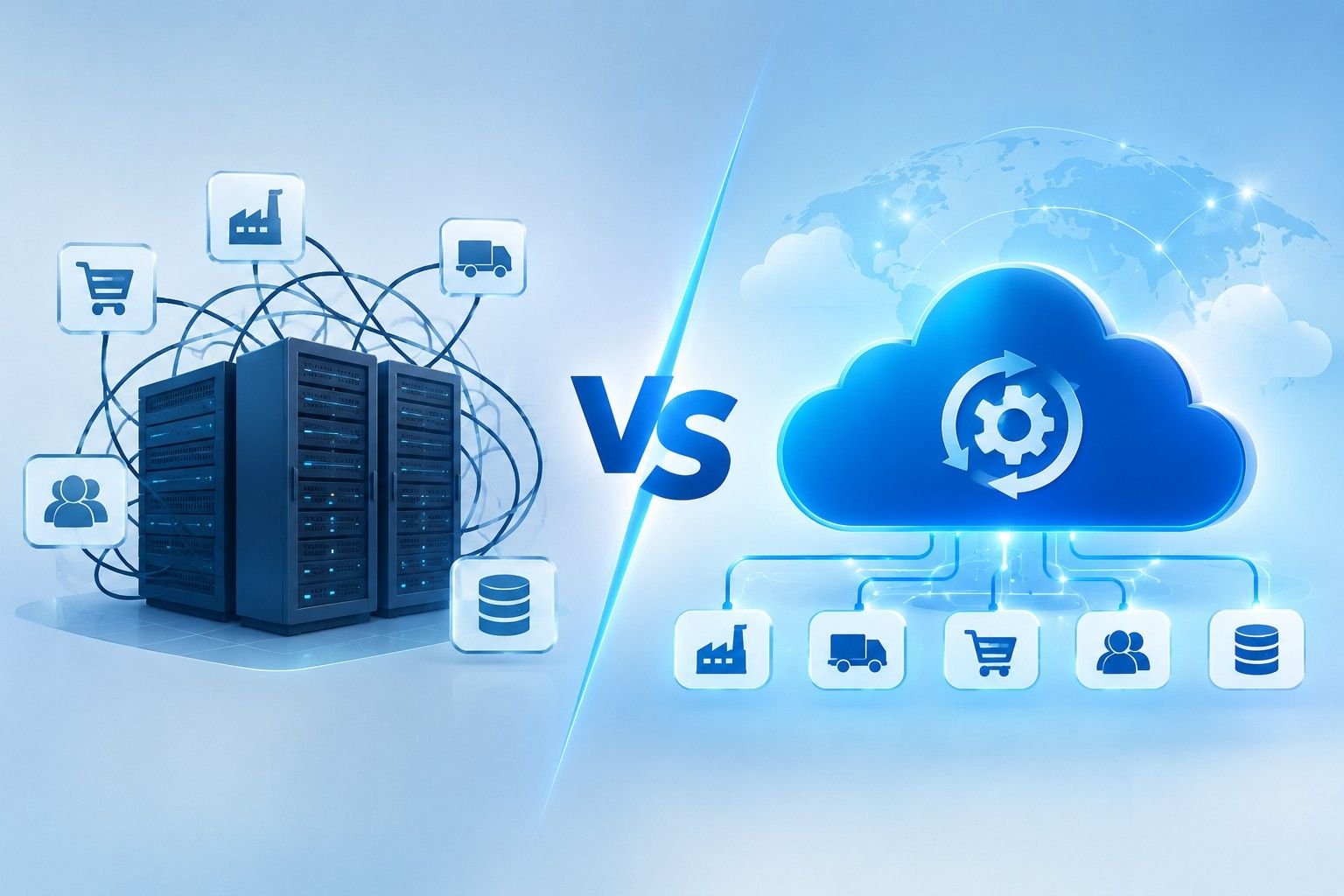
The biggest difference between SAP PI/PO and SAP CPI is their deployment architecture.
SAP PI/PO is traditionally deployed within a private enterprise environment. Organizations are responsible for the underlying infrastructure, system administration, upgrades, and maintenance.
SAP CPI operates as a cloud service within SAP Business Technology Platform. This cloud-native model reduces the infrastructure responsibilities associated with traditional middleware.
For enterprises looking to reduce their dependency on on-premise infrastructure, this is a major advantage of SAP CPI Migration.
2. Scalability
Traditional PI/PO environments require organizations to plan infrastructure capacity based on expected workloads.
With SAP Cloud Integration, businesses can take advantage of a cloud-based architecture designed to support scalable enterprise integration.
This becomes particularly valuable when organizations experience increasing transaction volumes, add new applications, or expand into additional markets.
3. Integration Capabilities
SAP PI/PO was primarily designed around enterprise application integration and process orchestration.
SAP Integration Suite provides a much broader integration ecosystem. Along with Cloud Integration, organizations can use capabilities such as API Management, Integration Advisor, Open Connectors, and event-based integration.
SAP specifically highlights event-based integration and modern integration approaches as part of the transition from PI/PO to Integration Suite.
This allows enterprises to move beyond traditional point-to-point integration patterns.
4. API Management
API-driven architecture is becoming increasingly important for modern enterprises.
SAP Integration Suite includes API Management, allowing organizations to create, secure, publish, monitor, and govern APIs.
This is particularly useful when businesses need to expose enterprise services to partners, customers, mobile applications, or other external systems.
While SAP PI/PO can participate in API-based integration, Integration Suite provides a more comprehensive approach to API management.
5. Event-Driven Integration
Modern applications increasingly need to respond to events in real time.
SAP Integration Suite supports event-driven scenarios through capabilities such as Event Mesh and Advanced Event Mesh. SAP identifies event-based integration as one of the modern approaches organizations can adopt during their transition from PI/PO.
This gives enterprises greater flexibility when designing real-time and loosely coupled integration architectures.
6. Development and Integration Flows
In SAP PI/PO, developers work with objects such as communication channels, message mappings, interface objects, and integration configurations.
SAP CPI uses integration flows (iFlows) to design and implement integration scenarios.
Developers can configure adapters, transformations, routing, security, and exception handling within these integration flows.
However, organizations should not assume every PI/PO interface can simply be copied into CPI. SAP’s migration guidance recommends assessing existing objects to determine which can be reused, refactored, or developed from scratch.
7. Maintenance and Operations
SAP PI/PO environments generally require more direct involvement from enterprise IT teams for infrastructure and platform maintenance.
With SAP CPI, the underlying cloud platform is managed by SAP, allowing organizations to focus more on integration development, governance, monitoring, and business requirements.
This can reduce operational overhead and allow IT teams to dedicate more resources to strategic initiatives.
8. Hybrid Integration
Moving to the cloud does not mean an enterprise has to move every system to the cloud.
Many organizations continue to operate SAP S/4HANA, ECC, databases, and other systems within private environments while adopting cloud applications.
SAP Integration Suite supports hybrid scenarios, allowing cloud and on-premise applications to communicate. SAP also provides Edge Integration Cell for running cloud-designed integration content in customer-controlled environments.
This makes SAP CPI suitable for organizations following a gradual cloud migration strategy.
9. Monitoring and Management
Enterprise integrations require reliable monitoring because a failed interface can affect critical business processes.
SAP Integration Suite provides cloud-based capabilities for monitoring integration flows, processing messages, identifying failures, and managing integration environments.
Centralized administration can also simplify the management of different integration capabilities.
This becomes particularly valuable for enterprises operating large and complex integration landscapes.
10. Future Readiness
The biggest strategic difference between SAP PI/PO and SAP CPI is their positioning for the future.
SAP PI/PO is approaching the end of standard maintenance in 2027, with extended maintenance options available to 2030. Organizations therefore need to start planning their transition rather than waiting until the final deadline.
SAP Integration Suite is designed around modern cloud integration requirements and provides capabilities for APIs, events, hybrid integration, and other digital transformation scenarios.
For businesses planning SAP S/4HANA transformation, cloud adoption, automation, or broader SAP BTP initiatives, SAP CPI can provide a more future-ready integration foundation.
Should Your Business Migrate from SAP PI/PO to SAP CPI?
For most organizations running significant PI/PO landscapes, migration should be treated as a strategic modernization project.
However, enterprises should not immediately migrate every interface without assessment.
SAP recommends an assess, transform, and move approach. The assessment phase identifies existing integration assets and determines which can be reused, refactored, or rebuilt. SAP’s Migration Assessment capability can also help estimate technical migration effort and provide modernization recommendations.
A successful SAP PI/PO to SAP CPI Migration should therefore begin with:
- Complete interface inventory
- Dependency analysis
- Business-criticality assessment
- Identification of obsolete interfaces
- Migration feasibility assessment
- Target architecture planning
- Interface modernization
- Testing and validation
- Phased production migration
Conclusion
The comparison between SAP PI vs SAP CPI is ultimately a comparison between traditional enterprise middleware and a broader cloud-based integration strategy.
SAP PI/PO has played an important role in enterprise integration, but organizations now have an opportunity to modernize their integration landscape through SAP Integration Suite.
SAP CPI provides cloud-based integration, while the broader Integration Suite adds capabilities such as API Management, event-driven integration, Open Connectors, and Integration Advisor.
For enterprises planning their next stage of digital transformation, SAP PI/PO to SAP CPI Migration can reduce dependence on legacy middleware while creating a scalable and flexible foundation for future integration requirements.
The best migration strategy is not simply to replicate every existing PI/PO interface. It is to assess the current landscape, eliminate unnecessary complexity, modernize critical integrations, and build an integration architecture that is ready for the future.