Introduction
As businesses continue their digital transformation journey, enterprise integration has become more important than ever. Many organizations that have relied on SAP Process Integration (SAP PI) and SAP Process Orchestration (SAP PO) for years are now planning to move to SAP Cloud Integration (SAP CPI), a core capability of SAP Integration Suite.
SAP PI to SAP CPI migration is not just a technical upgrade—it is a strategic investment that improves scalability, flexibility, security, and cloud readiness. As SAP continues to focus on cloud-first technologies, organizations are increasingly adopting SAP CPI Migration Services to modernize their integration landscape and prepare for future business requirements.
This guide explains the complete migration process, best practices, common challenges, and how enterprises can successfully transition to SAP Integration Suite.
What is SAP PI to SAP CPI Migration?
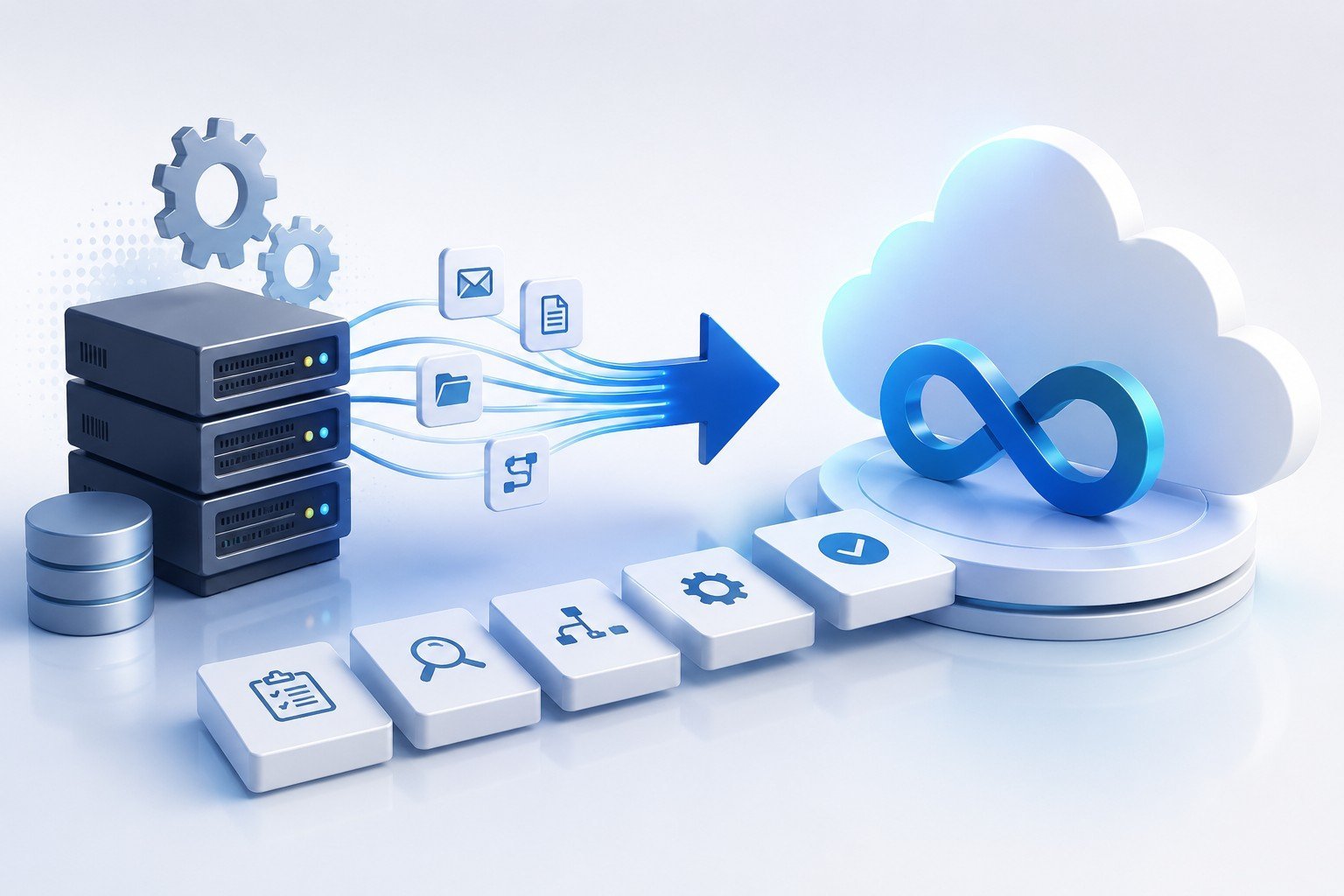
SAP PI/PO to SAP CPI Migration is the process of moving existing integration scenarios, interfaces, mappings, and workflows from an on-premise SAP Process Integration/Process Orchestration environment to SAP Cloud Platform Integration (SAP CPI) within SAP Integration Suite.
Unlike SAP PI/PO, SAP CPI is a cloud-native integration platform that enables businesses to connect SAP and non-SAP applications, cloud services, APIs, databases, and third-party systems through a centralized and scalable environment.
This migration allows organizations to simplify integration management while reducing infrastructure maintenance and preparing for future innovations within the SAP ecosystem.
Why Enterprises Are Migrating to SAP CPI
Organizations across industries are choosing SAP CPI Migration Services because cloud integration provides several long-term business advantages.
Some of the major benefits include:
- Improved scalability without hardware limitations
- Lower infrastructure and maintenance costs
- Faster deployment of integration scenarios
- Better monitoring and centralized management
- Enhanced security with SAP cloud services
- Easy integration with SAP S/4HANA, SuccessFactors, Ariba, Salesforce, and other applications
- Continuous feature updates from SAP
- Support for APIs, REST, OData, SOAP, and modern integration protocols
By adopting SAP Integration Suite Migration, enterprises can create a future-ready integration architecture that supports business growth.
Step 1: Assess Your Existing SAP PI/PO Landscape
Every successful SAP PI/PO Migration starts with a comprehensive assessment.
During this phase, businesses should identify:
- Existing interfaces
- Message mappings
- Integration scenarios
- Communication channels
- Adapters currently in use
- Custom developments
- Business-critical integrations
A detailed assessment helps determine which integrations should be migrated, redesigned, optimized, or retired.
Many organizations also perform an interface dependency analysis to understand the impact of migration on connected applications.
Step 2: Define Your Migration Strategy
Not every organization follows the same migration path.
Depending on business requirements, companies generally choose one of these approaches:
Lift-and-Shift Migration
Existing integrations are recreated in SAP CPI with minimal functional changes.
Redesign Migration
Legacy interfaces are redesigned using cloud-native capabilities to improve performance and maintainability.
Hybrid Migration
Some integrations remain on SAP PI/PO while critical interfaces move gradually to SAP CPI.
Choosing the right strategy is one of the most important decisions in any SAP CPI Migration Project.
Step 3: Prepare SAP Integration Suite
Before migrating interfaces, the SAP Integration Suite environment must be properly configured.
This includes:
- User roles and authorizations
- Security certificates
- API management
- Connectivity settings
- Cloud Connector configuration
- Destination management
- Transport landscape
Proper environment preparation reduces deployment issues during migration.
Step 4: Migrate Integration Flows
This is the core phase of SAP PI/PO to SAP CPI Migration.
Migration activities typically include:
- Rebuilding integration flows (iFlows)
- Recreating message mappings
- Configuring adapters
- Implementing routing logic
- Error handling
- Exception management
- Security configuration
Since SAP CPI follows a different architecture than SAP PI/PO, some interfaces require redesign instead of direct conversion.
Experienced SAP Integration Experts often optimize integrations during this phase rather than simply copying existing configurations.
Step 5: Test Every Integration Thoroughly
Testing is one of the most critical stages of any SAP CPI Implementation Services project.
Organizations should perform:
- Unit testing
- Functional testing
- End-to-end integration testing
- Performance testing
- Security validation
- User Acceptance Testing (UAT)
Every interface should be validated to ensure message accuracy, processing speed, and business continuity before production deployment.
Step 6: Deploy and Monitor
After successful testing, migrated integrations can be deployed to the production environment.
Continuous monitoring helps organizations identify:
- Message failures
- Performance bottlenecks
- Connectivity issues
- Security alerts
- Processing delays
SAP Integration Suite provides built-in monitoring capabilities that improve operational visibility and reduce downtime.
Common Challenges During SAP PI/PO to SAP CPI Migration
Although migration offers significant benefits, organizations often face several challenges.
Some of the most common include:
Complex Legacy Integrations
Older SAP PI/PO environments often contain years of custom development that require careful analysis.
Adapter Compatibility
Certain adapters may require redesign or replacement within SAP CPI.
Data Mapping Differences
Message mappings may need redevelopment because SAP CPI uses different integration capabilities.
Security Configuration
Authentication methods and certificate management differ between SAP PI/PO and SAP CPI.
Downtime Risks
Without proper planning, migration can impact business-critical operations.
Working with an experienced SAP CPI Consulting Services provider helps minimize these risks and ensures a smoother migration process.
Best Practices for SAP PI/PO to SAP CPI Migration
Organizations can improve migration success by following these best practices:
- Conduct a complete interface inventory before migration.
- Prioritize critical business integrations.
- Remove unused interfaces to simplify the migration.
- Document existing workflows and mappings.
- Follow SAP integration standards.
- Perform phased migration instead of migrating everything simultaneously.
- Implement continuous monitoring after deployment.
- Regularly optimize integration performance.
These practices reduce project complexity while improving long-term maintainability.
Why Choose Professional SAP CPI Migration Services?
Migrating enterprise integrations requires technical expertise, planning, and industry experience.
Professional SAP CPI Migration Services help organizations:
- Reduce migration risks
- Accelerate project timelines
- Improve integration performance
- Minimize business disruption
- Ensure secure deployment
- Follow SAP best practices
A reliable SAP Integration Solution Provider can also help modernize existing integrations instead of simply replicating outdated processes, enabling businesses to maximize the value of SAP Integration Suite.
Conclusion
The shift from SAP PI/PO to SAP CPI Migration is more than a technology upgrade—it’s an opportunity to modernize enterprise integration, improve operational efficiency, and prepare for future digital initiatives.
With the capabilities of SAP Integration Suite, businesses gain a scalable, secure, and cloud-ready integration platform that supports evolving enterprise needs. By following a structured migration strategy, performing comprehensive testing, and partnering with experienced SAP Integration Experts, organizations can ensure a successful transition with minimal disruption.
Whether you’re planning your first migration assessment or looking for trusted SAP CPI Consulting Services, investing in a well-executed migration today will help your business build a stronger, more agile integration landscape for the future.